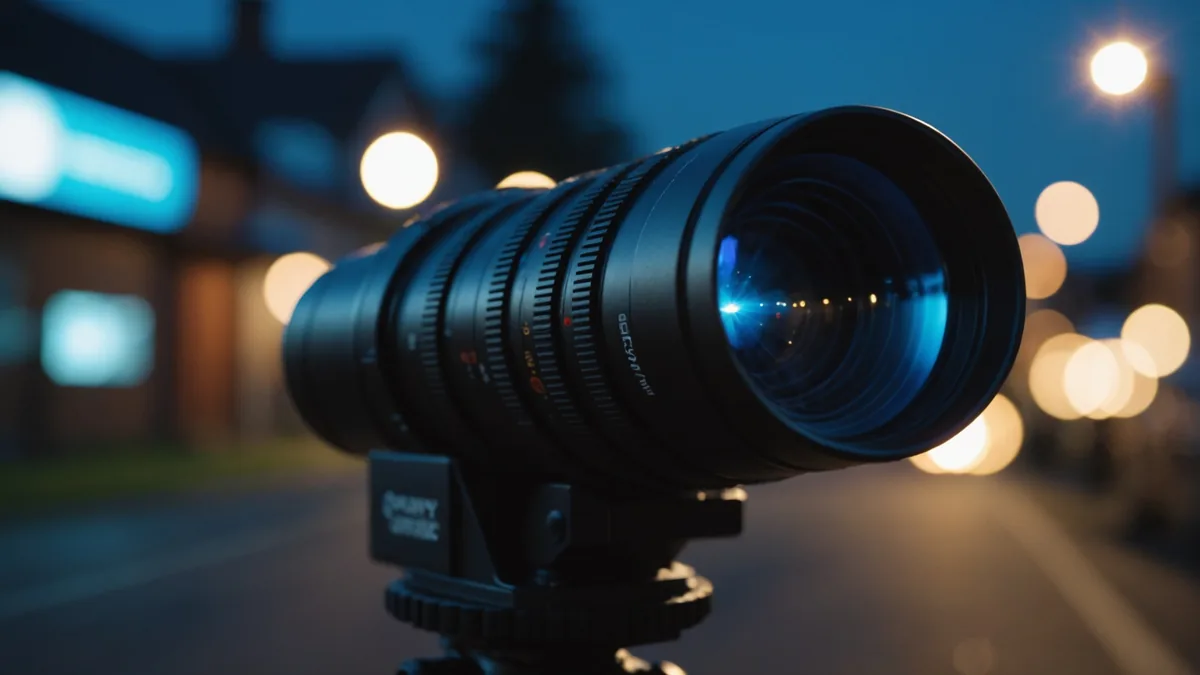
Anamorphic lenses are one of those things in cinematography where the technical explanation and the visual result seem completely disconnected until you've actually shot with one. The explanation — cylindrical optics that squeeze a wider horizontal field of view onto a narrower sensor — sounds like an engineering compromise. The result, on screen, looks unlike anything else in motion picture photography.
This guide covers the optics, the visual characteristics, the practical workflow implications, and what you actually need to know before renting an anamorphic set for the first time. We've tried to be specific about what's genuinely useful and honest about where the format creates real complications.
The optics: what's actually happening
A standard spherical lens projects a circular image onto the sensor, cropped to whatever aspect ratio the sensor captures — typically 1.78:1 (16:9) for most modern cinema cameras, or wider if you're shooting on a large-format sensor like the ARRI ALEXA 35 or Sony VENICE 2.
An anamorphic lens squeezes the image horizontally during capture, using cylindrical lens elements. A 2x anamorphic squeeze means the horizontal field of view is compressed by a factor of two on the sensor. In post, you desqueeze the footage — stretching it back horizontally — to reveal a 2.39:1 wide-frame image (sometimes called Scope) from a sensor that, without anamorphic glass, would only capture 1.78:1.
The practical result: you capture a much wider frame from a smaller sensor, without cropping resolution to get there.
The optical byproducts — the horizontal lens flares, the oval bokeh, the slightly reduced contrast and heightened sensitivity to flare — are not defects being corrected. They're physical consequences of how the light passes through cylindrical elements, and they're generally regarded as desirable characteristics that give anamorphic footage its distinctive look.
Squeeze ratios explained
Not all anamorphic lenses use the same squeeze ratio, and this has significant workflow implications:
2x anamorphic
The traditional cinema standard. A 2x squeeze on a Super 35 sensor produces a 2.39:1 frame when desqueezed. Examples: Cooke Anamorphic/i, ARRI/Zeiss Master Anamorphic, Panavision Primo Anamorphic. These are the lenses used on mainstream Hollywood productions. Also the most expensive to rent and the most demanding to shoot with — they're physically large, require careful focus pulling, and the bokeh is strongly oval.
1.33x anamorphic
Designed to work with cameras that natively capture 4:3 or 4:3-derived sensor modes. A 1.33x squeeze on a 4:3 frame produces 1.78:1 — not Scope, but a usable widescreen result. This is where the Blackmagic Pocket Cinema Camera 6K in open gate mode, or various Micro Four Thirds cameras, fit in. The bokeh is less dramatically oval and the flares are subtler than 2x glass, but the lenses are smaller and more affordable. Good starting point if you're learning the format.
1.5x and 1.6x anamorphic
Middle-ground options, often designed for specific modern sensor formats. Less optically distinctive than 2x, but can work well with cameras that don't have a 4:3 open-gate mode. Examples include certain Sirui and Laowa anamorphic glass in the more affordable range.
The visual characteristics: the honest version
Anamorphic glass produces four visual characteristics that distinguish it clearly from spherical footage:
Horizontal lens flares. The cylindrical elements create elongated horizontal streaks when a bright source is in or near frame. The colour of the flare depends on the lens coating — blue flares are characteristic of older uncoated or period-correct glass, amber flares occur on some vintage Lomo anamorphics, cooler blue-white on modern glass. These flares can be used deliberately as part of the visual language of a scene, or they can appear when you least want them. Either way, you need to know how to manage them.
Oval bokeh. Out-of-focus highlights are elongated vertically, creating a distinctive egg-shaped bokeh pattern rather than the circular bokeh of spherical lenses. More pronounced on 2x glass than 1.33x. Looks unmistakably cinematic; also draws immediate attention to itself, which may or may not serve the story.
Focus breathing and field curvature. Many anamorphic lenses — particularly vintage options — exhibit significant focus breathing (the field of view changes as focus is adjusted) and field curvature (the edges of the frame fall into focus at a different focus distance than the centre). These are not defects to fix in post; they're physical characteristics you need to account for during the shoot.
Reduced contrast and characteristic rendering. Compared to a matched spherical prime, anamorphic glass typically produces slightly lower contrast, a specific kind of softness in the highlights, and a distinctive rendering of skin tones. These characteristics are what people mean when they describe a "filmic" quality. They're also characteristics that survive compression and streaming formats where other forms of image distinction get crushed out.
What the format actually demands from you
Shooting anamorphic is more technically demanding than spherical work, in ways that matter for planning a rental:
Focus pulling is harder. The oval bokeh means out-of-focus areas look obviously wrong at close distances, which makes imprecise focus more noticeable than with spherical glass. On a narrative production this is usually a dedicated focus puller's job. On a solo or two-person crew it means slower shooting — more time per setup to nail focus, or a willingness to shoot at distances where depth of field gives you a safety margin.
Rigging is heavier and more specific. Cinema anamorphic glass — a set of Cooke Anamorphic/i primes, for instance — is physically larger and heavier than equivalent spherical glass. The front barrel is usually wider. Some lenses have oval front elements. Support rigs need to account for the weight and the additional length. If you're renting anamorphic glass, also plan your support and follow focus configuration before the shoot day.
Your camera's sensor mode matters. Shooting a BMPCC 6K or similar camera? You need to enable the open-gate 4:3 mode to get the full anamorphic field of view. Shooting on a Sony FX3 or FX6 in 16:9 and using 2x glass? You'll desqueeze to 3.56:1 — an unusual aspect ratio that requires framing decisions to be made accordingly. Check your camera's anamorphic-specific sensor modes before the shoot day, not on the day.
Monitoring requires desqueeze. Shooting the squeezed image and trying to compose in-camera without a desqueezed view is genuinely difficult. Most modern cinema monitors — SmallHD, Atomos Shogun, etc. — have built-in desqueeze modes. Make sure your monitor supports this, or that you're comfortable composing a squeezed image with practice.
Renting anamorphic glass for the first time: what to ask for
When looking at anamorphic rentals through Wedio, the listing should specify the squeeze ratio and the lens mount. Here's what to confirm before booking:
- Squeeze ratio — matches your camera's sensor mode
- Lens mount — PL, EF, or E-mount, and whether an adapter is needed
- Front diameter and filter thread — relevant for any matte box setup
- Whether a follow focus is included or needs to be rented separately
- Known characteristics — some owners note specific quirks of their glass in the condition report
For a first anamorphic rental, a 1.33x set on a Blackmagic or Sony camera in 4:3 mode is a more forgiving starting point than diving straight into 2x cinema glass on a multi-day narrative shoot. The optical characteristics are still distinctly anamorphic; the focus and exposure demands are slightly more manageable.
A note on vintage versus modern anamorphic glass
The split between vintage and modern is more pronounced in anamorphic glass than in spherical lenses. Vintage anamorphic — Soviet Lomo square-front lenses from the 1970s-80s, Isco Gottingen optics, early Cooke glass — has significant character: unpredictable flares, soft corners, inconsistent coatings between elements of a set. These qualities are actively sought out for certain looks.
Modern anamorphic glass — ARRI/Zeiss Master Anamorphic, Panavision Primo Anamorphic, Leica Thalia Anamorphic — has the same optical format but is calibrated for consistency, modern colour science, and integration with digital workflows. The flares are designed, not accidental. The focus is precise. The rendering is consistent across a set of primes.
We're not saying vintage glass is better or worse — the choice is a creative one that belongs to the project. But vintage anamorphic requires more preparation than modern glass, and the unpredictability that makes it interesting also means you need test footage before the shoot day, not during it.
What to shoot on your first anamorphic rental
Rent it for a project where the aesthetic fits. Anamorphic footage reads as cinematic and wide; it's visually different enough that it draws attention to the format choice. If you're shooting a commercial interview series or a corporate event video, anamorphic glass may not serve the material — the flares and oval bokeh will feel out of place against a clean talking-head framing.
Where it earns its rental cost: narrative short films with outdoor sequences, documentary work with visually rich environments, music video shoots where the lens is part of the aesthetic intention. The horizontal flares from a window or a street light become compositional elements rather than optical problems.
Give yourself a full day of testing before a multi-day shoot with rented anamorphic glass. One hour on the lens — understanding how the focus behaves, where the flares appear, how the monitor's desqueeze looks against the final output — is worth more than reading about it.
If you're browsing anamorphic options on Wedio and have questions about a specific lens or how it works with a particular camera body, use the message function in the listing to ask the owner directly. Most people listing this kind of glass know it well and are happy to give honest information about what to expect.