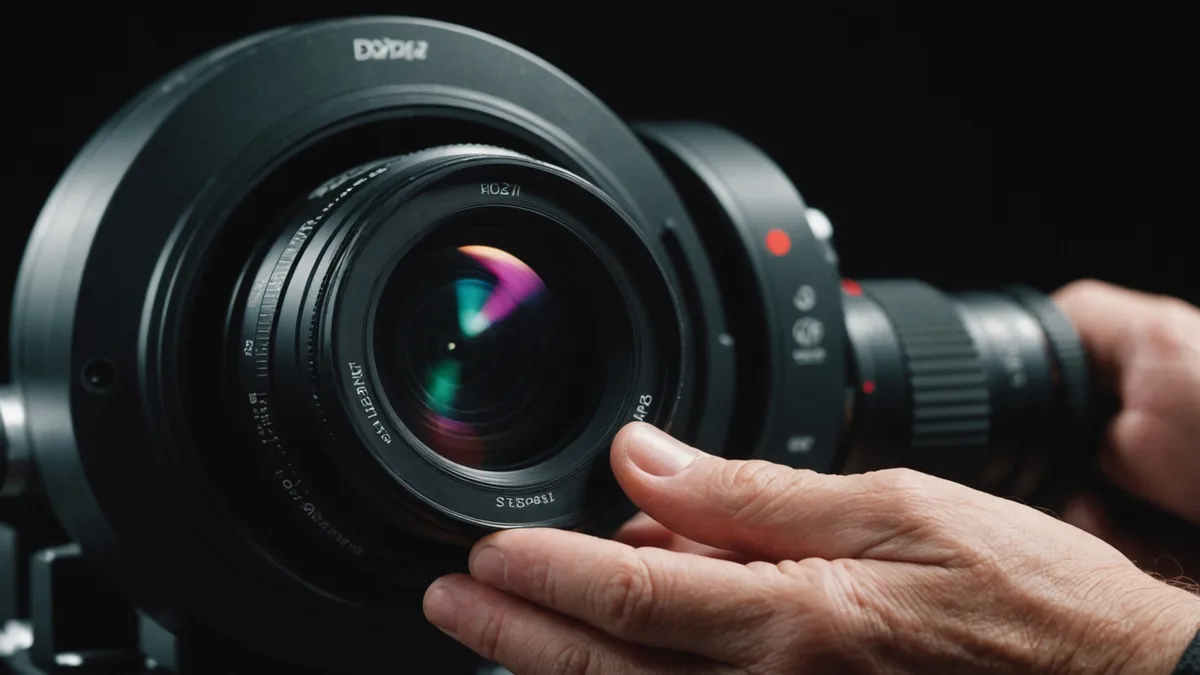
A cinema lens is a precision optical instrument that's been designed to maintain calibration through thousands of focus and aperture cycles, survive temperature changes, and deliver consistent performance over a production career that often spans a decade or more. The care practices that protect that precision aren't complicated, but they require actual consistency — not the "I'll be careful" approach that most of us apply until the first time something goes wrong.
This article covers care practices for both owners and renters. The responsibilities are different but complementary. Owners have a long-term interest in the lens maintaining its optics, calibration, and resale value. Renters have a duty-of-care obligation during the rental period, plus a direct financial interest in not being responsible for damage at return.
Cleaning: what's safe and what isn't
Front and rear element cleaning is the area where the most unnecessary damage happens. The instinct to wipe a smudge off a front element immediately, with whatever's available, is understandable — and often wrong.
What works:
- A blower bulb (Giottos Rocket or equivalent) for removing loose dust and debris before any physical contact with the element
- A clean, dry, fine-weave microfibre cloth for dry smudges and fingerprints — used in gentle circular motions from the centre outward
- Lens cleaning fluid applied to the cloth first, never directly to the element — one or two drops is sufficient
- Lens tissue (single-use, not cotton or paper) for more stubborn contamination
What doesn't work and causes damage:
- Breathing on the element and wiping — exhaled moisture contains oils and proteins that leave residue
- T-shirt corners or any clothing fabric — these contain abrasive fibres
- Tissues, paper towels, or anything not designed specifically for optics
- Excessive cleaning — if there's nothing visible on the element, leave it alone. Unnecessary cleaning is the most common source of fine scratches on front elements over time.
The rear element deserves particular care. Front element damage is usually cosmetic and has minimal impact on image quality at working apertures. Rear element damage — scratches, cleaning marks, internal contamination — is positioned where it creates the most optical interference in the image path. Never clean the rear element unless there is visible, specific contamination that needs to be removed.
Storage: temperature, humidity, and positioning
Cinema glass develops internal haze — a cloudiness or fogging of internal elements — primarily from two causes: improper storage over time and impact. Haze from storage is a slow process that happens when lenses are stored in conditions with fluctuating humidity and poor air circulation.
For owners storing lenses between rentals:
Use lens caps, front and rear, every time the lens is in a case. This sounds obvious but it's the one that gets skipped. Caps protect against dust accumulation and prevent the kind of casual contact that causes front element marks.
Store horizontally, not vertically. Most cinema lens housings are designed to be stored and transported with the lens axis horizontal. Vertical storage for extended periods can put uneven stress on internal element groups and lubricants.
Avoid temperature extremes. The priority here is not cold or warm per se — it's rapid cycling between extremes. A lens moved from a cold car to a warm studio without time to acclimatise can develop condensation internally, which is how moisture-related haze begins. Standard practice is to leave gear in its case for 20–30 minutes when moving between significantly different temperature environments.
Silica gel in enclosed cases. If you're storing lenses in a sealed Peli or Nanuk case, small silica gel packets help maintain stable humidity. Replace them when they're saturated. This matters more in summer months or in storage environments that aren't climate-controlled.
Transport: where most physical damage actually occurs
The majority of physical damage to cinema lenses — dented barrels, misaligned focus mechanisms, cracked front elements — happens during transport, not during use. The lens is either insufficiently padded, rolling around loose in a bag, or dropped during loading and unloading.
For rental transport specifically:
Each lens should be in a dedicated foam insert or lens case during transport. A lens loose in a camera bag against other metal objects is how barrel damage happens. If the owner provides lens pouches or a dedicated case, use them. If they don't, and you're responsible for transport, lens pouches (LensPouch or equivalent) are inexpensive and worth carrying.
Camera bags go in the boot, not on the seat. A bag that can slide or topple during a sudden stop is a risk. If you're transporting multiple lenses in the same bag, they should be separated by foam or padded dividers.
Note the condition at pickup and return. For renters: if a lens arrives in a case with specific positioning and padding, return it in the same configuration. The owner packed it that way for a reason. For owners: photograph your packing before each rental so you know what configuration you sent it out in.
Focus and aperture mechanisms: normal use and when to be concerned
A well-maintained cinema lens should have a smooth, consistent focus ring with no looseness, no sticking, and no hard spots through its full rotation. The aperture ring should click or turn smoothly depending on whether it's a clickless or clicked iris.
Normal operation of a follow focus or lens motor doesn't damage the lens if the gear is matched correctly. Damage happens from:
- Forcing the focus ring beyond its hard stops
- Using a follow focus gear that's too tight against the lens's focus ring, creating binding
- Attaching a lens support that places lateral stress on the barrel rather than supporting the lens underneath
If you notice a change in the feel of the focus ring during a rental — stiffness that wasn't there at pickup, looseness, or any mechanical noise that wasn't present before — document it immediately and contact the owner or Wedio before returning the lens. Trying to finish the shoot without mentioning it and hoping the owner doesn't notice is how minor issues become major disputes.
Returning lenses: the standard that protects everyone
Returning a rented lens in better condition than you found it is not an unusual standard — it's what a professional should be doing with any borrowed equipment. In practical terms, this means:
Clean both elements before return. If there are fingerprints on the front element from your use, clean them before packing. Don't leave that for the owner to discover during a condition check.
Return caps in place, lens in its case, case closed. Not caps sitting loose in the bag, not the lens pointing element-down in a side pocket.
Tell the owner about anything that happened, even if it looks minor. A small mark that appeared during the rental, a moment where the lens was knocked (even if it looks fine), unusual focus behaviour that started during the shoot — these are things the owner needs to know. We're not saying every minor incident is a damage claim; we're saying that the condition report exists to track the lens's state over its lifetime, and a renter who communicates openly is a renter who gets good reviews and better access to future rentals.
For owners: inspection between rentals
After each rental, before the lens goes out again:
- Look through both ends at a light source — check for any new internal haze, dust, or foreign matter that wasn't there before
- Check the front and rear elements for any new marks against your pre-rental photos
- Run the focus ring through its full range and note any change in feel
- Check the mount surface for any new marks or damage to the mount flange
- Update the condition report if anything has changed, even minor wear
An updated, accurate condition report protects you as an owner by establishing what the lens looked like before each rental — and it gives the next renter an honest picture of what they're working with. That honesty is what makes P2P rentals work as a model over time.
If you're listing lenses through Wedio and have questions about what constitutes normal wear versus damage worth documenting, our support team can help with specific cases. The goal is a lens that stays in service for years — which is better for owners, better for renters, and better for a film community that doesn't have unlimited budgets for replacement glass.