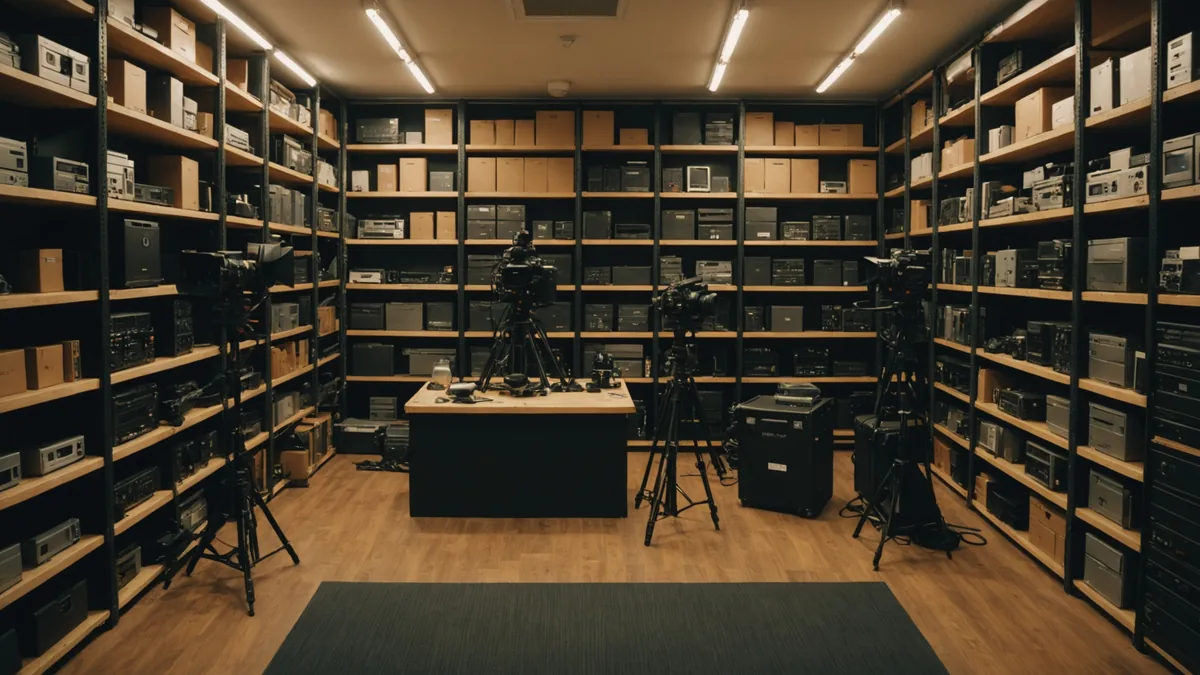
We built Wedio, so it would be easy to write a piece that simply argues P2P rental wins every time. It doesn't. Hire houses exist for genuine reasons — they have broad inventory, professional delivery logistics, established relationships with production insurance companies, and the ability to service large-scale productions that need 40 pieces of kit on the same day. For the right production type, those things are exactly what you need.
This guide is an honest attempt to lay out when each model makes sense, because the answer actually depends on the specifics of your shoot. We've talked to filmmakers who've been burned going P2P when they should have used a hire house, and filmmakers who've wasted significant budget at a hire house for work that P2P would have served perfectly.
Where hire houses have the advantage
Large-volume productions needing coordinated kit
If you need 15 separate pieces of grip equipment, a full lighting package, two camera bodies, and a matched lens set — all confirmed available, all delivered to set on the same morning — a hire house is the right answer. Coordinating that across 15 different P2P lenders is logistically painful, introduces many single points of failure, and puts you in a position where one lender backing out at the last minute collapses your entire kit plan.
Hire houses carry large, pre-configured packages for precisely this reason. You order "documentary package, level 3" and they build it. The production management complexity is theirs, not yours.
Same-day or very short-notice requirements for specialised gear
If you need an ARRI Alexa 35 package with a full Cooke S7/i lens set starting tomorrow, a hire house is more likely to have that available than the P2P market. Hire houses maintain inventory specifically to meet on-demand professional production needs. Their unit economics require high turnover and broad availability.
On the P2P side, availability depends on what individual owners have listed and when they've made it available. A particular body or lens set being unavailable because the owner is using it themselves is a real constraint of the model.
Long-term production relationships
Commercial production companies, TV series productions, and documentary houses with ongoing work often have established credit accounts and long-term relationships with one or two hire houses. Those relationships produce discounts, priority access, and service levels that aren't replicable with a P2P marketplace. If your production company is booking 25 days of camera gear per month, the hire house relationship is worth maintaining.
Where P2P rental has the advantage
Single-day or weekend shoots with a defined small kit
For a single-day documentary interview setup, a weekend short film shoot, or a music video with a defined kit list of three to six items, P2P rental is almost always the better option on cost and flexibility. The price difference between P2P and hire house rates for a single camera body and a pair of lenses for two days is typically 40–60% — meaningful money when you're funding a project personally or from a small production budget.
A shoot that needs a Blackmagic Pocket 6K Pro, a set of Rokinon cinema primes, and an Aputure 120d II for a weekend can often be put together on Wedio for 1,800–3,200 DKK total. The equivalent hire house package in Copenhagen would typically run 4,500–7,000 DKK, depending on the house and whether you have a standing account.
Access to specific or unusual gear
P2P markets list gear that hire houses often don't carry because the inventory economics don't work for them. Vintage lens sets — specific Zeiss Super Speed configurations, older Cooke glass, specialty anamorphics from smaller manufacturers — are more likely to be found through P2P owners who bought them for personal use than in a hire house that stocks primarily modern, standardised inventory.
Equally, specific accessory configurations — a particular cage setup with a specific follow focus that someone has dialled in for a RED Komodo — exist in the P2P market in a way that hire houses, which maintain standardised packages, don't replicate.
No minimum booking periods
Most established hire houses in Copenhagen have minimum booking periods — typically one full day, sometimes two for certain categories of equipment. If you need a camera for a half-day test shoot or a single hour of B-roll at the start of a project, you're paying for the full day regardless.
P2P bookings can be flexible about duration. Many Wedio owners are willing to do half-day rates or hourly arrangements for small items, particularly if they're local and the handoff is convenient. This matters for productions where gear requirements are intermittent rather than sustained across full shoot days.
The insurance question
This is the area where most comparisons between P2P and hire houses get either vague or incorrectly confident. Both models involve insurance, but the structure differs.
At hire houses, you pay an equipment damage waiver (EDW) — typically 8–15% of the hire value — and the hire house's own insurance policy covers damage above your excess threshold. Your production insurance may or may not cover the EDW gap depending on your policy wording.
On Wedio, rental insurance is included with every booking. It covers accidental damage to the gear during the rental period. This is a cleaner model for independent productions than the hire house EDW structure because the insurance is baked into the rental cost and doesn't require a separate production policy to activate. For a short film production that doesn't have a standing production insurance policy, this matters.
We're not saying the Wedio insurance model is categorically better than hire house EDW — for a large production with a comprehensive production insurance policy already in place, the hire house structure may integrate more cleanly with what you already have. The point is: don't assume you're automatically better protected because you're using a hire house. Read what both models actually cover before you book.
A practical decision framework
Here's how we'd think through the decision for any given shoot:
- Kit list has more than 10 items from multiple categories, all needed on the same day: use a hire house for the coordination reliability.
- Kit list has fewer than 8 items, flexible pickup timing, budget is a real constraint: P2P is likely 40–60% cheaper for the same quality of gear.
- You need a very specific or unusual item — vintage glass, a specific camera body configuration, a particular accessory: P2P market is more likely to have it.
- You're a commercial production company with a client whose contract requires production insurance naming the hire house as certificate holder: use the hire house.
- You need delivery to a location and can't do pickup: hire houses generally offer delivery; many P2P owners do too, but it's not guaranteed — confirm before booking.
The honest answer for most independent filmmakers working on personal projects, short films, music videos, or small-budget documentaries in Copenhagen is that P2P rental will save you meaningful money and give you access to gear the hire houses don't stock. The hire house answer makes sense when coordination, volume, or production insurance structure makes it necessary — not as a default.