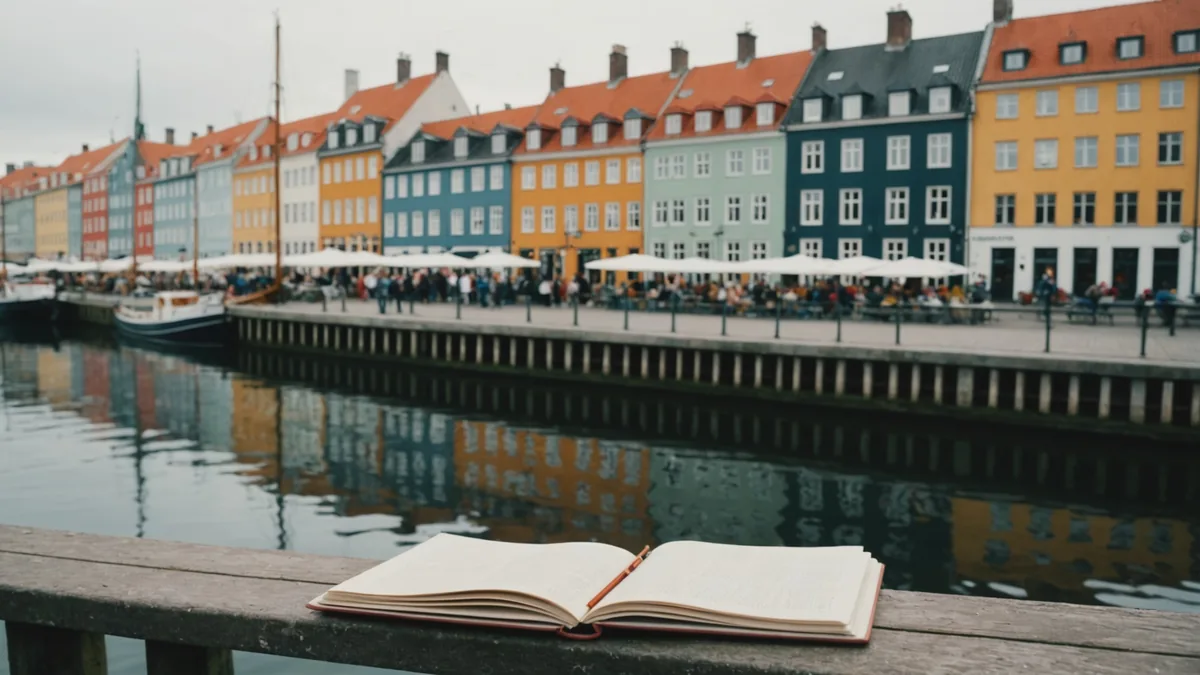
Copenhagen is one of the more filmable cities in northern Europe. The architecture is human-scale, the streets have visual coherence that doesn't require a set decorator to fix, and the light quality — particularly from October through March — is something that Scandinavian filmmakers have been deliberately using for decades. It's also a city with specific rules about filming in public spaces, a drone ordinance that catches many first-time visitors off guard, and a noise ordinance that matters if you're running a generator or shooting late.
This guide is for independent productions scouting locations in Copenhagen — primarily Danish filmmakers, but also crews coming from elsewhere in Scandinavia or further afield for specific projects. We'll cover where to shoot, what kind of permits you actually need, and how to work with the city's distinctive seasonal light.
The permit question: what actually requires a permit
Most small-to-medium independent productions in Copenhagen operate without a full permit, and often legally so. The general rule from Copenhagen Municipality (Teknik- og Miljøforvaltningen) is that documentary, student, or non-commercial filming in public spaces with a small crew and no significant footprint does not require a permit. A filmmaker with a camera and a tripod shooting on a public street is within their rights.
What does require notification or a permit:
- Closing or blocking public access to a pavement, street, or square — even temporarily. If you need to hold pedestrians for a shot, you need coordination with the municipality.
- Commercial productions — if the output is for commercial advertising, you should contact Copenhagen Filming (copenhagenfilming.com) which is the official film office for the city. They provide a one-stop coordination service for productions of all sizes.
- Drone operation within the Copenhagen urban area requires specific permissions from the Danish Civil Aviation and Railway Authority (Trafikstyrelsen) and is subject to the EU drone regulations. The no-fly zones around Copenhagen Airport (EKCH) extend considerably further into the city than most people expect. Check the UAS Denmark airspace map before assuming a location is clear.
- Filming on Metro stations, S-tog platforms, or DSB facilities requires a media permit from each respective operator.
The practical takeaway: a two-person documentary crew with camera, tripod, and sound gear can shoot almost anywhere in Copenhagen with no permit at all. The moment you add a large crew, vehicles, equipment trucks, or need to manage crowd or traffic, you're in permit territory and should contact Copenhagen Filming early — they're genuinely helpful and understand independent productions.
Nørrebro: the most visually varied neighbourhood
Nørrebro is where most Copenhagen filmmakers end up for urban character. Blågårds Plads is a large public square that's consistently interesting throughout the day — morning market stalls, afternoon kids on bikes, evening food vendors. The visual texture is good: coloured building facades, old Danish brick next to newer commercial frontage, clear sightlines down the main streets.
Jægersborggade, the pedestrian street running off Ravnsborggade, is quieter and more curated — small shops, ceramic and coffee aesthetics — and is frequently used for street scenes that need a clean, slightly aspirational version of Copenhagen. It also gets very busy on weekends, so if you need clear background shots without crowds, arrive before 10am on a Saturday or shoot on a Tuesday.
The Nørrebro cemetery (Assistens Kirkegård) is a functioning burial ground that doubles as a public park and has been used as a filming location for decades. Filming is permitted with respect for ongoing services. The cemetery light — large mature trees filtering a low Danish sky — is distinctive in a way that's very hard to replicate.
Vesterbro: industry and nightlife texture
Vesterbro has the best of Copenhagen's industrial-aesthetic locations — particularly the Kødbyen (Meatpacking District), which is a mix of active food processing businesses, creative studios, restaurants, and cultural venues. The architecture is functional late-19th-century Danish industrial: white-painted concrete, heavy timber doors, floor-to-ceiling single-pane windows.
Filming in Kødbyen for non-commercial purposes is generally fine. If you need interior access to any specific building, contact the tenant directly — the building owners are often receptive, especially for short film or documentary use.
Istedgade and its surroundings have a grittier register — older commercial frontage, mixed residential and retail, a density and layering that reads well on camera. This is useful for contemporary urban narrative material that isn't the aspirational Copenhagen of tourist photography.
Islands Brygge and the harbourfront
Islands Brygge is one of the few places in Copenhagen where you get significant water in the frame with accessible, human-scale waterside paths and bridges. The Kalvebod Waves (a public undulating boardwalk on the west side of the harbour) is architecturally distinctive and relatively unknown outside Denmark, making it useful for shots that need a contemporary urban environment without looking like anywhere specific.
The harbourfront is subject to changing light throughout the day and has strong reflective properties from the water — beautiful in soft overcast conditions, challenging in direct sun unless you have ND filtration on your lenses and a high-contrast shooting plan.
Drone operation along the harbour is heavily restricted. The proximity to central Copenhagen airspace means most of the inner harbour area is in Class D or controlled airspace requiring ATC coordination. If you need aerial footage of the Copenhagen harbourfront, get the appropriate permits and plan this separately — do not assume any harbour location is clear for drone use.
The Scandinavian light: how to use it
Copenhagen's light in autumn and winter is genuinely distinctive and worth understanding if you're not from here. The sun's arc from October to February is very low — at the winter solstice, the sun peaks at about 7 degrees above the horizon at noon in Copenhagen. This means the "golden hour" light that lasts 30–40 minutes at lower latitudes lasts most of the day in mid-winter. From about 9am to 3pm, the sun is raking across facades and streets at a low angle, producing long directional shadows and warm sidelighting.
The practical consequence: interior filming through windows is excellent in winter because the sun angle is low enough to actually light interiors from outside — something that doesn't happen in summer at this latitude. For a window key setup in a Copenhagen apartment from October to March, you often don't need any supplemental light at all if you time the shoot correctly.
Summer light is the opposite problem: long days (Copenhagen at midsummer has a sunset around 10pm and a sunrise before 5am) mean blue-hour light is long and beautiful, but the sun is very high in the sky from 10am to 6pm and produces flat, unflattering overhead light outdoors. Summer exterior filming in Copenhagen is best done early morning or late evening if you want interesting light.
Practical gear notes for Copenhagen shoots
If you're coming from outside Denmark to shoot in Copenhagen, note that the electrical standard is Type K (Danish three-pin, 230V/50Hz) — bring appropriate adapters for your gear. This is a small thing that costs exactly zero minutes of prep time to sort and exactly two hours of stress to resolve on location if you forget.
For lightweight location shoots in Copenhagen, the city's geography is genuinely walkable — most of the interesting locations in the inner city and Nørrebro/Vesterbro are within 30–40 minutes on foot or a few minutes by bike. Heavy equipment trucks are rarely necessary and parking for production vehicles near popular location areas can be problematic. When booking gear on Wedio, consider whether the owner can meet you at location rather than requiring a drive across the city — same-day handoff at a location-convenient pickup point is often the faster approach for single-day shoots.