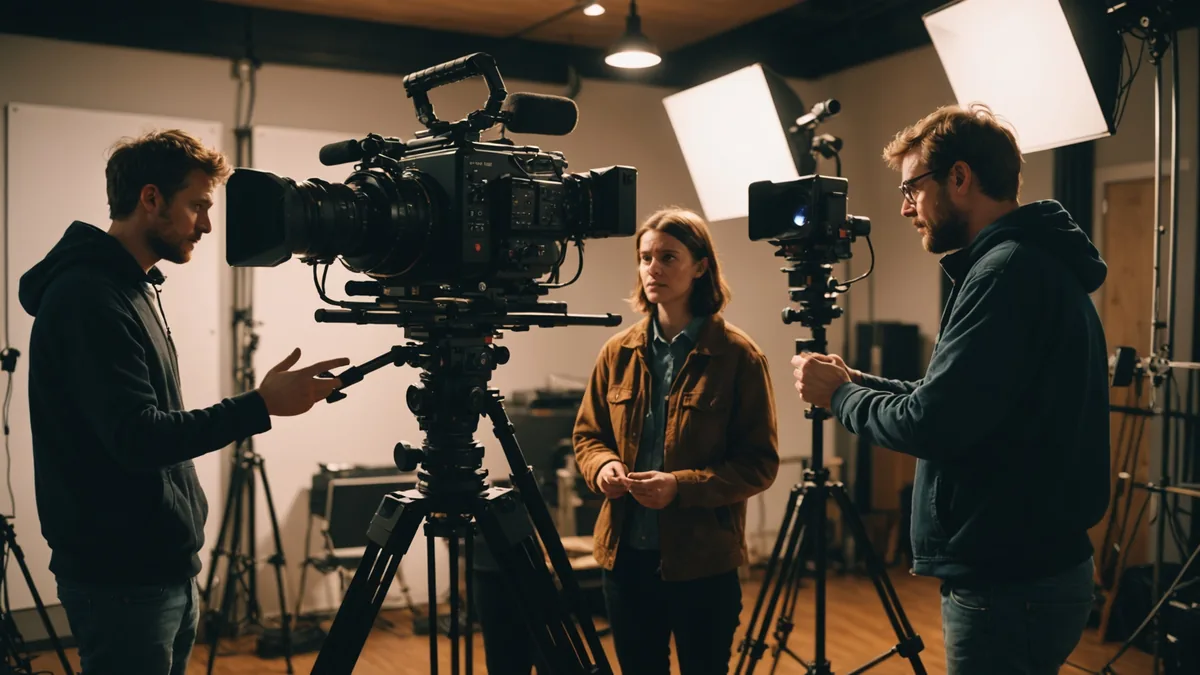
Short films are where most independent filmmakers learn to make difficult decisions. Not because short-form production is more noble than commercial work, but because the resource constraints are absolute. You have a fixed number of shooting days, a fixed budget for gear, and a script that assumes more than both allow. What happens next — how you adapt, what you cut, what you fight to keep — is usually what determines whether the film gets finished and whether it's any good.
These notes come from the pattern of decisions that tend to separate short films that get completed, screened, and make sense as a viewing experience from those that stall in production or deliver technically but don't hold together.
Gear decisions begin with script analysis, not wish lists
The most common mistake in short film gear planning is working from a dream list down — "I want to shoot on an ALEXA Mini, I want Cooke S4/i primes, I want a full grip and electric package" — and then cutting until the budget is exhausted. The better approach is working from the script up.
Ask: what does this script actually require from the image?
A two-character drama in a single apartment location requires a capable camera body, two or three primes, controlled lighting for two setups, and clean audio. It does not require a large-format sensor, an anamorphic lens set, a 5-tonne truck, or a DIT. A chase sequence through a real exterior location might require a lightweight camera system, a gimbal operator, and enough media to shoot without stopping. The gear requirements are completely different because the images being made are completely different.
Write down what each scene requires visually, then plan gear from that list. Not the other way around.
Camera choice: matching sensor to story
For short narrative film, image quality and image character are both real considerations — in a way they aren't for corporate video or event coverage. The choice between a Sony FX6 and a Blackmagic URSA Mini Pro 12K isn't arbitrary; it comes with specific workflow implications and a specific visual language.
Sony FX6 (full-frame, dual native ISO). Excellent low-light capability, fast to operate, familiar colour science. The dual native ISO means you can shoot night exteriors at ISO 12800 without the image falling apart — a significant practical advantage for short films that shoot at night to avoid permit complications. Rental rates typically 1,200–1,800 DKK/day on Wedio.
ARRI ALEXA Mini LF. The look that defines contemporary cinema — the organic highlight rolloff, the skin tone rendering, the texture at high ISO. Also more expensive to rent, heavier, requires a larger power system, and produces RAW files that need a proper DIT workflow. Justified for a short film that prioritises the specific image quality and has the post-production workflow to handle it. Not justified for a two-day short where the post budget is limited and the DOP is also operating and pulling focus.
BMPCC 6K or 6K G2. Genuinely excellent image quality, particularly in open-gate 6K RAW mode with compatible lenses. The limitations are real: battery life requires V-lock plates and a cage, the ergonomics don't support handheld work without a proper rig, and the camera's design assumes a more set-like shooting environment. Ideal for controlled productions with time for setup; less ideal for anything fast-paced.
One honest assessment: for most short films shot with a modest crew, the difference between these cameras in the final delivery is smaller than the difference made by good lighting and proper exposure. A correctly exposed, well-lit FX6 file holds up in a festival DCP. An underexposed ALEXA Mini file does not.
Lenses: the hierarchy that matters for short film
On a short film, lens choice has a more direct creative impact than camera choice — the rendering characteristics of the glass are visible in almost every frame. This is where a modest budget can be spent more effectively by renting a set of quality primes rather than a more expensive camera body with a cheap kit zoom.
A sensible prime set for a short film might be three focal lengths: a wide (21mm or 24mm), a normal (35mm or 40mm), and a longer focal length for close coverage (75mm or 85mm). This covers the range from establishing shots to close-ups without over-complicating the package. A 50mm is often the most-used focal length on dialogue scenes; if you're renting a set, include one.
Zeiss CP.3 or CP.2 primes are well-suited to short film work: affordable rental rates, consistent look across the set, good enough wide-open performance that you can shoot at T2.1 without sacrificing edge quality. Not as cinematic in character as Cooke S4/i glass, but accessible at a rental price point that makes a full set viable on a short film budget.
Canon CN-E cinema primes (the EF-mount cinema glass, not the still lenses) cover a similar performance bracket. Very consistent across a set, good colour science, well-supported in Copenhagen's rental pool. A practical choice for productions shooting on Sony or Canon bodies with an EF mount.
We're not saying vintage glass is wrong for short films — a Helios 44-2 or a set of Soviet Lomo primes can give a short film a visual character that's completely distinctive. But vintage glass is less consistent, requires more technical prep, and sometimes behaves unexpectedly in specific lighting conditions. Know what you're getting into before the shoot day.
Lighting: the one area to invest in properly
Short films consistently look better when the lighting budget is protected, even at the cost of camera or lens choices. A single well-designed lighting setup — a motivated key light, a controlled fill, a practical or hair light that separates the subject from the background — is the difference between a film that looks considered and a film that looks captured.
Practical gear choices for a short film lighting package:
A bicolour LED panel — an Aputure 300X, a Nanlux Evoke 300B, or equivalent — as the key light gives you output from 2700K to 6500K in a single unit. This covers tungsten-matched practicals, daylight-through-window setups, and mixed sources. Important for locations where you can't control the ambient colour temperature.
A smaller fresnel or spot for separation. A hairlight or backlight that separates the subject from the background makes a significant visual difference in close-up coverage. Even a small Aputure MC or a practical redhead on a stand behind and above the subject adds three-dimensionality that a flat, front-lit setup can't achieve in post.
A bounce or reflector for fill. A large white reflector card on a C-stand is often better than a powered fill light — it responds to the key light's colour temperature and doesn't require its own power source. On a location with limited power access, this matters.
Audio workflow on a short film
Short films have the advantage over run-and-gun work of being able to plan audio setups. Scenes are repeated, takes are multiple, and the boom operator has time to find the right position before rolling. Use this advantage.
A dedicated sound recordist — even a student or emerging professional who works for credit — is worth asking about if your crew budget is genuinely zero. Someone whose only job is to boom and monitor levels produces audibly better audio than a second camera assistant who's been handed the boom as an additional task.
For the recorder itself, a Sound Devices MixPre-3 II or Zoom F6 on a short film production — something with proper preamps and discrete inputs — is worth the rental cost. The preamp quality difference between a Zoom H5 and a MixPre-3 is noticeable on quiet location audio, particularly dialogue in furnished interiors where you're capturing room tone as well as voice.
Plan your audio setup per scene before the shoot day. Know where the boom goes for each setup, know which channel is primary and which is backup, and know what the plan is for the one scene where the boom physically won't fit in the frame without entering the shot.
Workflow habits that protect the production
Beyond gear choices, the production workflow habits that make short films succeed under constraint:
Shot list, not only a storyboard. A storyboard describes how scenes look. A shot list describes the specific shots needed to assemble each scene in edit — and tells you when you have what you need to move on. Productions that run out of time in the shoot day usually do so because there was no mechanism to make the call that a scene was adequately covered.
A defined coverage minimum per scene. Before each scene, agree with the director: what's the minimum that constitutes a covered scene? Two-person dialogue usually needs a master and coverage on each character in the eyeline. A walk-and-talk might need two tracking setups from different angles. Define this before you start, so you know when you're done and when you're adding shots for security.
DIT or card management. On a two- or three-day short, the temptation is to offload cards at the end of each day and format them for the next. This is a risk. The safer practice — particularly if budget allows — is to have each day's media on two separate drives before anything is formatted. Losing a day of footage on a three-day shoot with a non-negotiable location is not recoverable. The cost of two extra hard drives is minimal against that risk.
A 30-minute debrief at wrap. Not a social conversation — a practical review. What was supposed to happen today that didn't? What's moved to tomorrow? What gear do we not need tomorrow that we could return to save rental days? This conversation, consistently, keeps the production tracking against plan rather than discovering on day three that a key scene has no coverage.
Where to cut when the budget forces it
If the budget forces cuts, here's the rough priority order for what to protect and what to release:
Protect: lead actor fee (committed), key lighting (one good unit covers most scenarios), audio recorder and boom, enough media cards to have a real margin, and the one lens focal length that covers most of your script.
Release: secondary lighting units that add polish to already-workable setups, the camera upgrade from an FX6 to an ALEXA Mini if the FX6 already covers what the script requires, follow focus hardware if your DOP can pull soft, additional days on gear that doesn't appear in the second half of the script.
The short films that get made are the ones where the production decided what the film actually needed — not what the DP or director wanted — and built the package around that. That decision, made clearly and early, is worth more than any single piece of gear.
If you're building a rental kit for a short film through Wedio and want advice on specific combinations, message the gear owners directly — people listing cinema-grade equipment typically understand how it's used in production and can give practical input on what a specific kit covers and what it doesn't.